EV Facts You Can Use
Get the real story about electric vehicles with EV Facts from the Electric Vehicle Association. Discover accurate information about EV driving. Find answers to your questions about EV ownership, battery life, and charging locations, vehicle safety, and how much you can save driving an EV compared to a gas or diesel vehicle.
Learn more about all the financial, health, and performance benefits of EVs so you can make the switch to driving electrically with confidence and knowledge.
Most recent EV facts
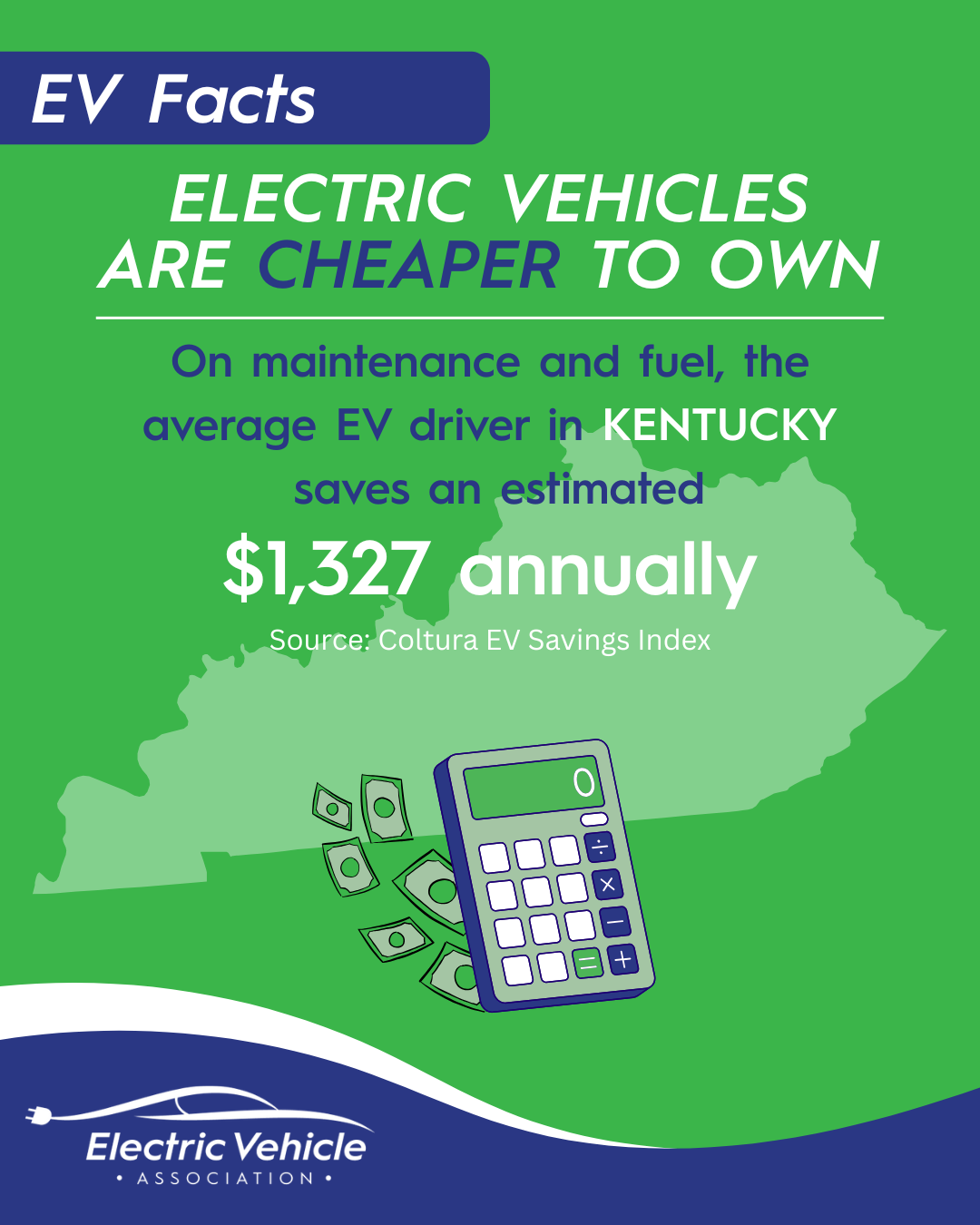
Switching to an EV could save you an average of $1,327 in Kentucky! That's enough to turn a regular weekend into a Kentucky themed adventure. Your savings could cover The Derby Experience: Get General Admission for two plus two tickets for a premium experience like the Bourbon and Bridles tour at the Kentucky Derby Museum! Follow that up with admission for a family of four to the Grand Avenue Tour at Mammoth Cave and tickets to the Louisville Slugger Museum & Factory! And you'd still have money leftover!
Ditch the gas station stop and embrace the "plug in, walk away" lifestyle! Charging your EV is as easy as plugging in your phone: the car refuels itself while you're at work, shopping, or sound asleep. More living, less waiting.
Ready to put more money back in your pocket? Fuelling with electricity at home is 60% cheaper than gas, and with fewer parts, you save on maintenance too! It's an easy win for your wallet and the planet. Plus, that instant, exhilarating torque of an EV will keep you smiling on every commute.
New Jerseyans could save $1,192 annually switching to an EV! Your annual EV savings could comfortably cover a two-night weekend stay in Cape May, especially during the shoulder seasons. This leaves room in the budget for dining out and enjoying local attractions like the Cape May Lighthouse while still having some cash left over!
Texans can save $1,199 annually by switching to an EV. A weekend in San Antonio is well within reach with your EV savings; you could comfortably afford a two-night stay in the city’s nicer hotels, and enhance your trip with a scenic GO RIO River Cruise, with adult tickets costing about $15.50 and children's tickets around $9.50, making it an affordable and iconic addition to your getaway. And you’ll still have some money left over!
Charging an electric vehicle at home is not merely convenient—it is the most fiscally advantageous choice for powering your vehicle. We believe the future of refueling is right inside your own garage!
An EV can save a Hawaiian $1,213 annually in fuel and maintenance costs. Many hotels offer kama'āina (local resident) discounts, making a 2-3 night stay at a beautiful property in areas like Ko Olina, Wailea, or the North Shore possible with the savings. Can your gas car do that?
For everyone in the back: YES, you can charge your EV in the rain. The car will be fine. You, however, might want an umbrella. ☔
How much can Arizona residents save by driving an electric vehicle? Quite a bit! Arizona’s typically higher than average gas prices equate to more savings when you switch to an EV!
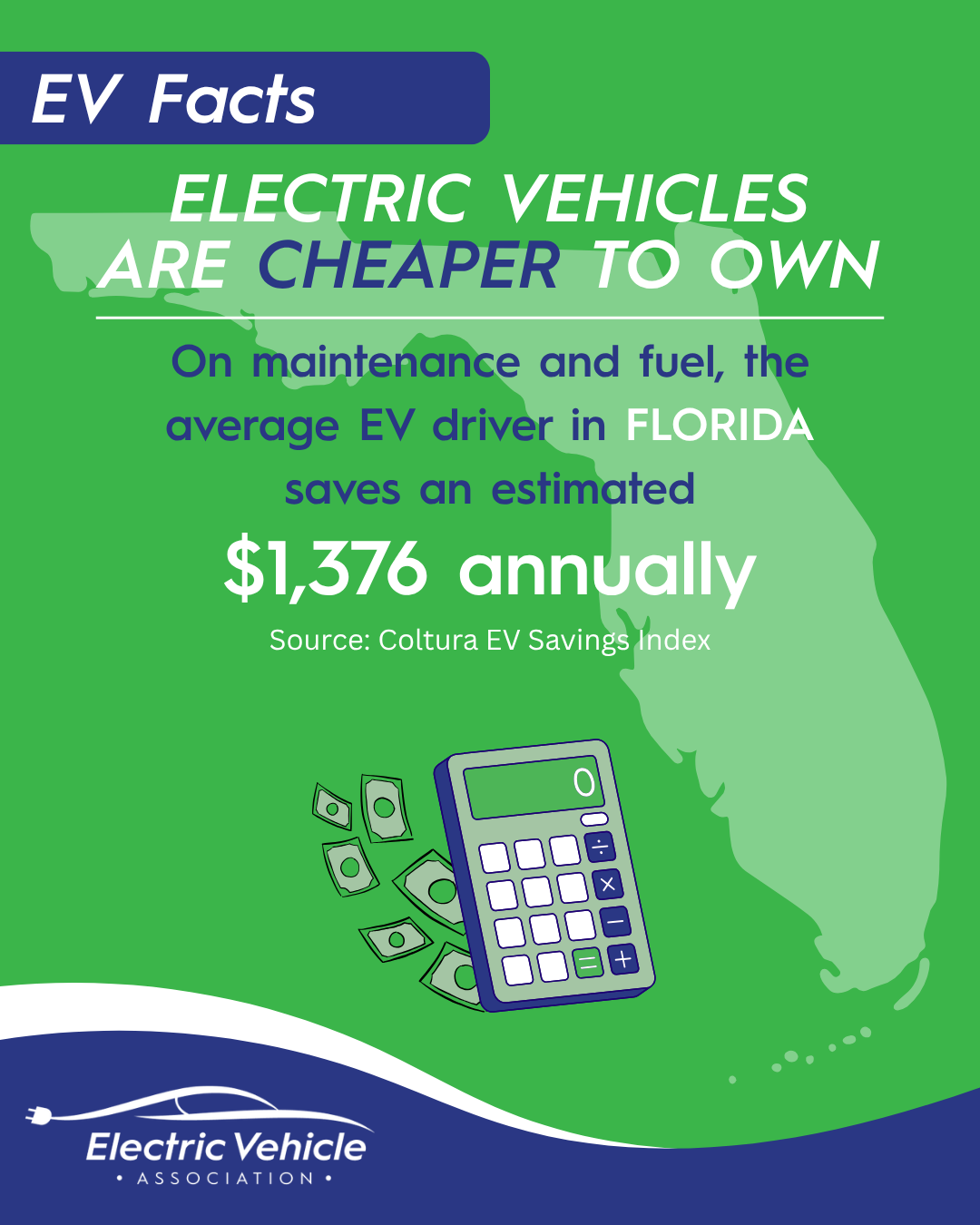
How much can Georgia residents save by driving an electric vehicle? A lot, because electricity costs significantly less than gasoline or diesel fuel. And EVs require little maintenance.
EVs are cheaper to own. Drivers in Michigan can save an estimated $824 annually. That's enough to drive across the Mackinac Bridge 206 times!
EV batteries are being recycled today, as a rapidly growing sector of the EV industry. Nearly 100% of the components can be reused and repurposed, unlike gasoline.
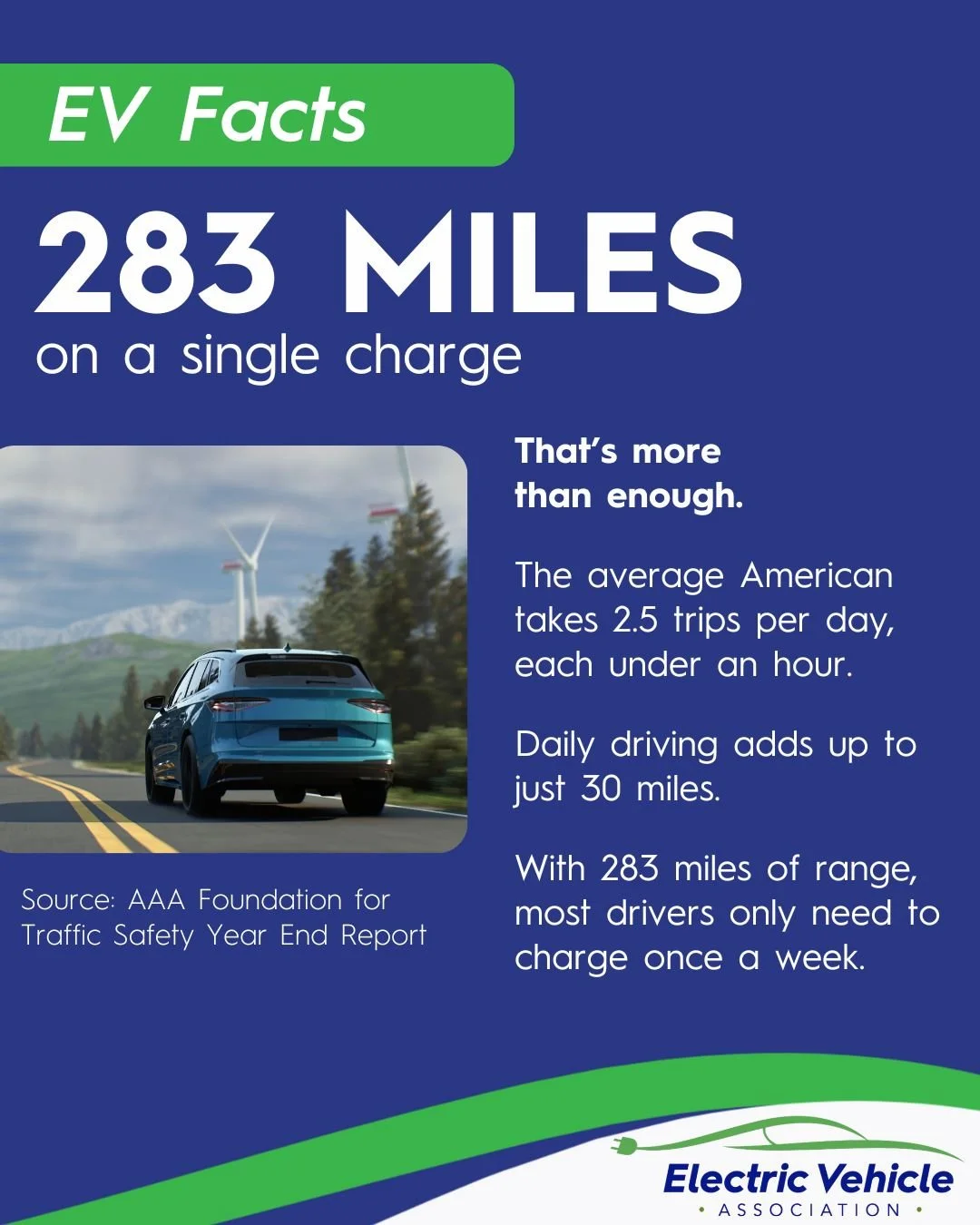
Most EVs today have over 250 miles of range standard, with the average being 283 miles. With the average trip between 30-37 miles, you’d only need to charge once a week!
An EV is a perfect road trip companion. With fast charging, you can go from 10% to 80% in as little as 18 minutes; less time than it takes for a bathroom break and lunch on a road trip!
Unlike gas cars which turn energy from fuel into brake dust, an EV can regenerate energy back into the battery from braking; increasing efficiency and costing you even less per mile.
Even if you can’t charge at home, if your workplace offers charging, you could charge your car at work one day for your whole week!
EVs support the grid. Smart charging and V2G tech balances demand while off-peak charging keeps the load minimal.
EVs offer accurate range estimates and help make sure you never run out of charge.
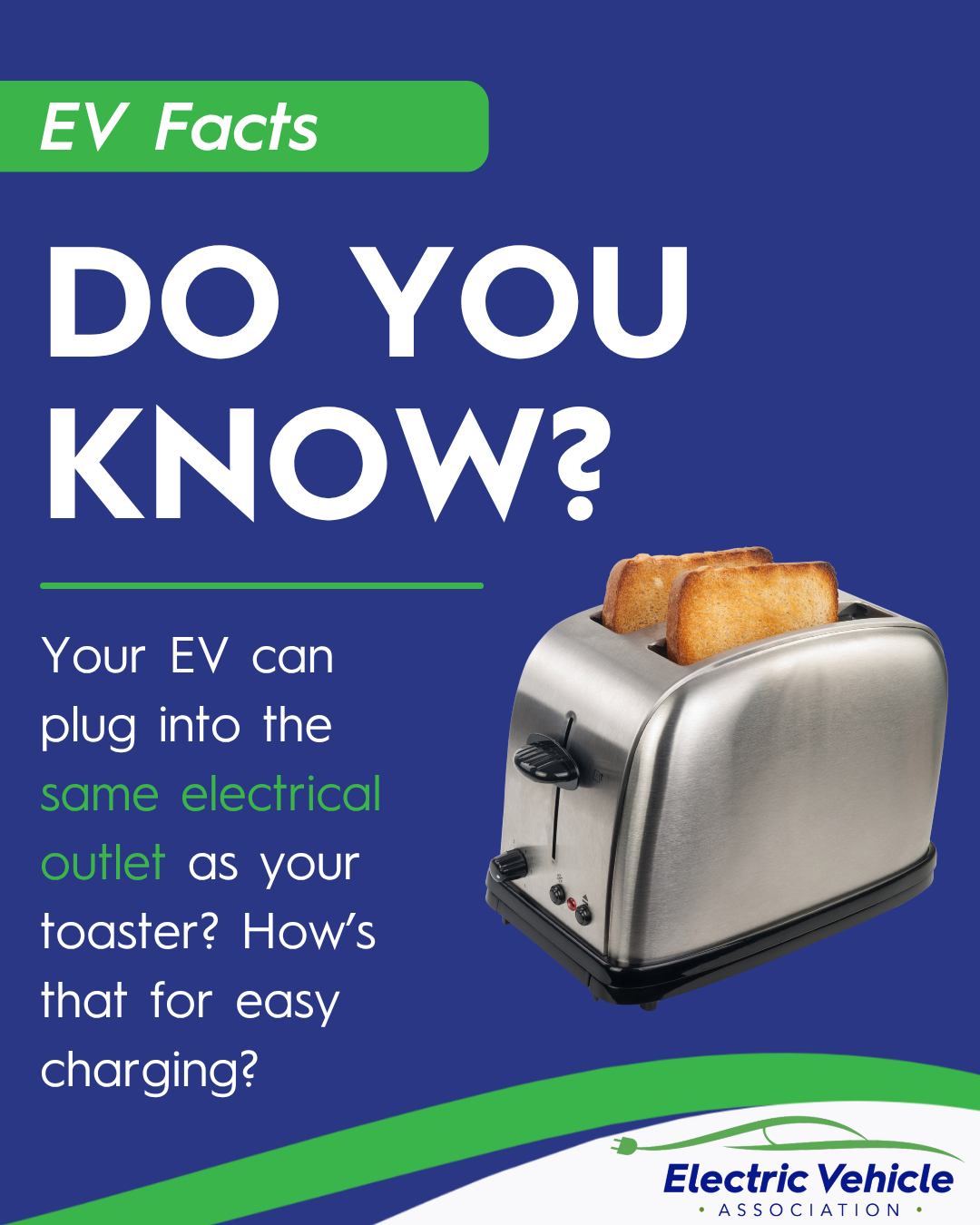
You don’t need special equipment or outlets to charge an EV; a normal household outlet will do the trick!
The average driver in the US drives 37 miles a day; even if you only used a 110v outlet to charge your car overnight, you’d be able to top up every night!
EV batteries are incredibly reliable. 97.5% of all EVs sold in the US are still using their original batteries.
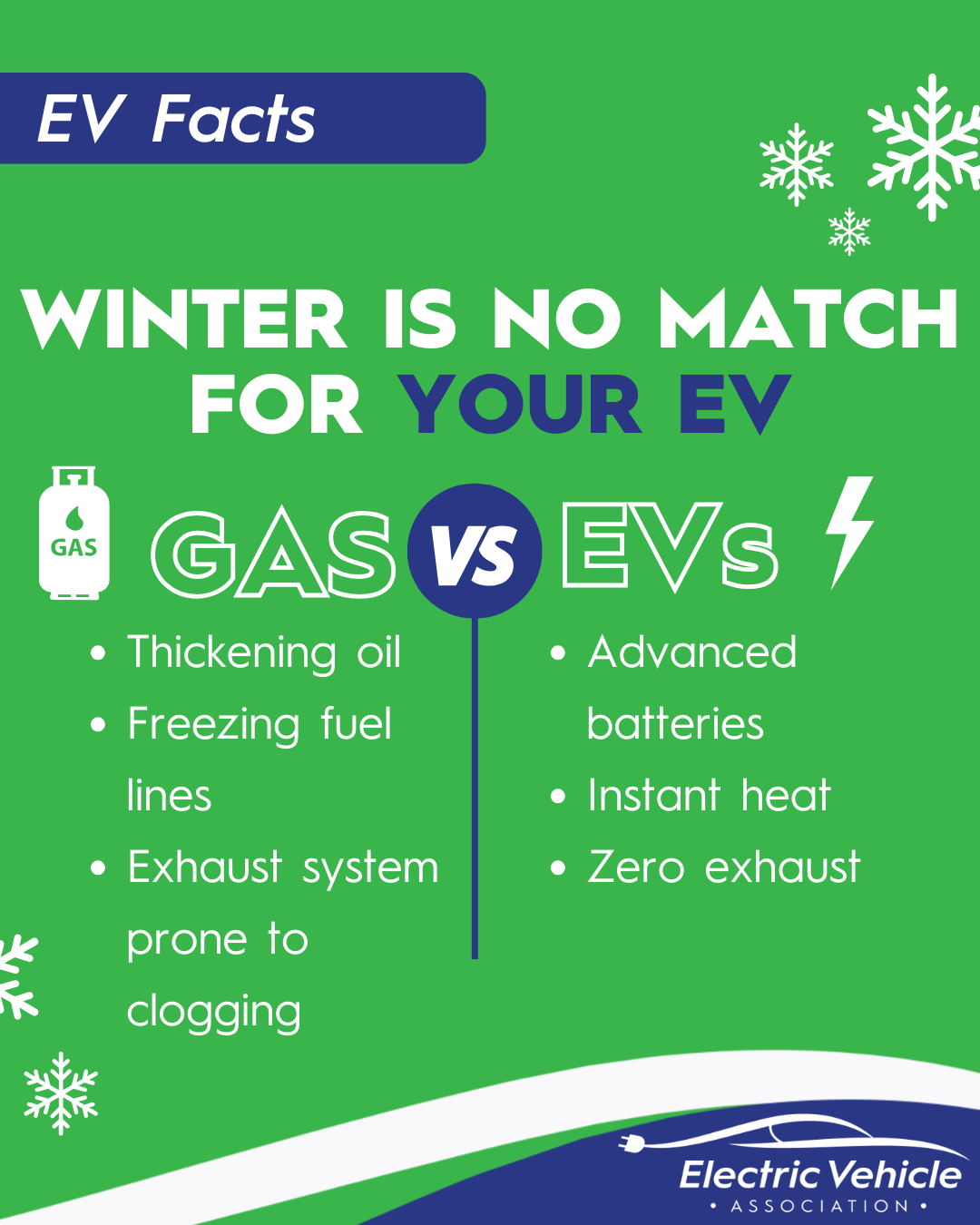
EVs offer a variety of benefits to winter driving. Instant heat and zero exhaust means you can warm your car up in the garage, in from the cold!
Charging your car is the same as charging your phone!