Driving Education Through Connection
By Ashley Lynn Qua, EVA Board Member
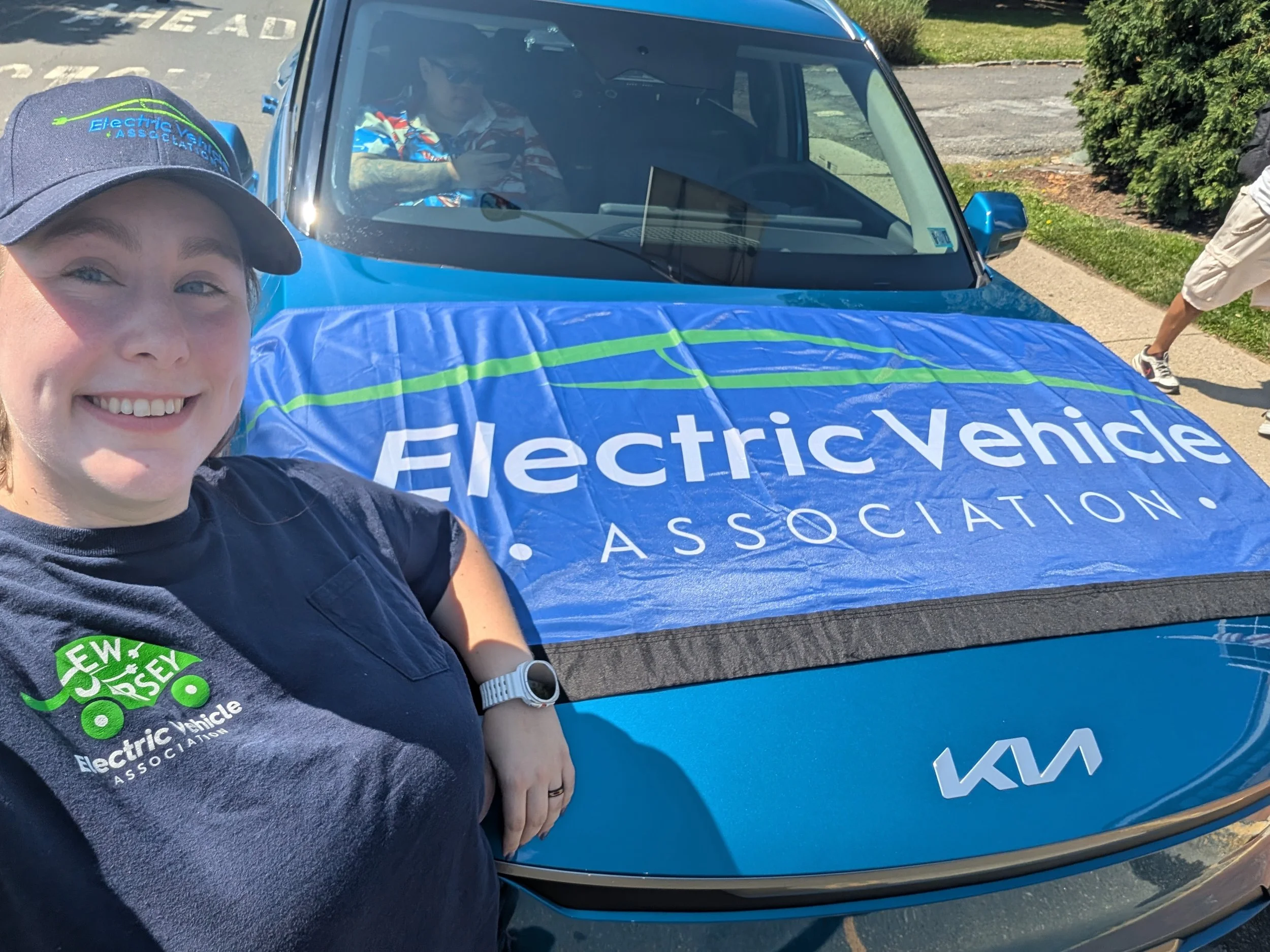
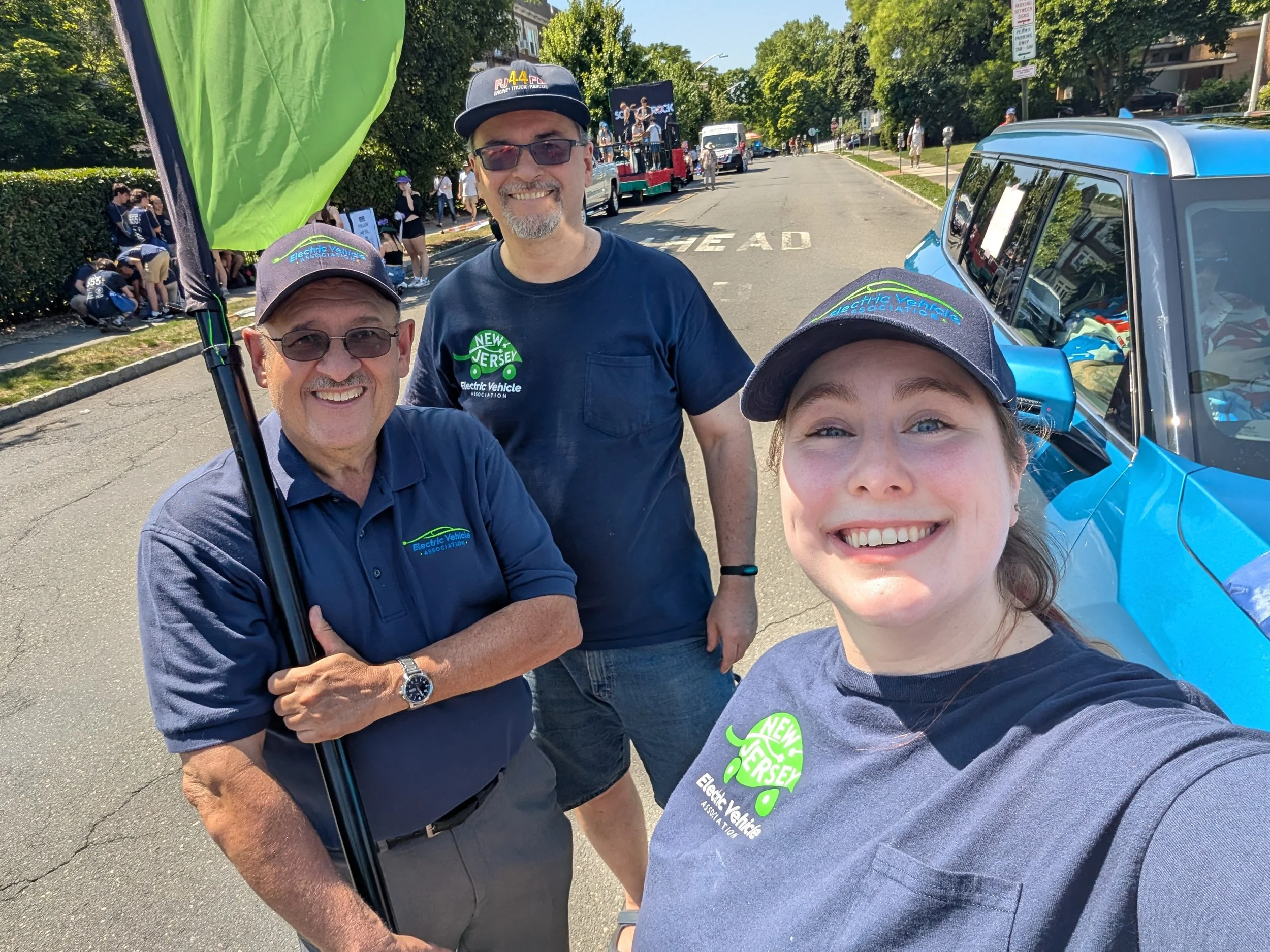
There is nothing quite like the energy of a hometown 4th of July parade. The summer heat radiating off the pavement, the chaos of floats and marching bands, and hundreds of people lining the sidewalk. This year, rolling down the street with the New Jersey Electric Vehicle Association, I knew I wanted to do more than just smile and wave from behind the wheel. I wanted a genuine way to break through the music and shouts to connect with the people lining our route. Not just another car passing by, but something they would remember.
Instead of plastering my Kia EV9 with technical jargon, kilowatt-hours, or charging speeds, I stuck to simple, highly relatable signs in the windows. I let the crowd know that I’ve saved roughly $15,500 in fuel since making the switch to electric. I highlighted that my car has seven seats and three rows, making it the ultimate setup for family camping trips and summer road adventures. I tailored the message to the exact people standing on the curb: families and lovers of the outdoors.
When we hit parade checkpoints and the momentum slowed, people actually walked right up to my car to chat. I watched onlookers reading the window signs out loud to their families and saw folks pulling out their phones to take pictures of our procession. I told my story as a neighbor and as a proud alumna of the local University. I talked about the freedom to drive wherever I want, the flexibility to carpool with friends or cruise to the beach with my dog, and the absolute peace of mind that comes with knowing my car can back up my home if the power goes out. Watching those connections click in real-time made my mind drift back to Denver, Colorado, where I hosted a breakout session at the Annual EVA Summit this past May. The core philosophy we practiced in that room was exactly what I was witnessing on the streets of New Jersey: Educate, Don't Advocate.
From Favors to Expertise
When chapter leaders sit down with local decision-makers, city council members, or county commissioners, the natural instinct is often to walk in with a set of prepared remarks and pitch: asking for a vote, a signature, or a rigid policy position. What I have seen is that true influence requires a complete shift in mindset. We have to stop looking at these meetings as opportunities to ask for favors and start seeing them as moments to offer essential, localized expertise.
During our breakout session at the Summit, I focused heavily on how to slow down and rethink the entire dynamic of outreach. When you stop treating a decision-maker as an opponent to be conquered and start treating them as a partner who needs information to make an informed decision, the pressure eases. The goal isn't to force a sudden political pivot, it’s to show up, listen, provide technical support, and actually do something tangible that solves a problem for whoever you are speaking to. You aren't there to take; you are there to give.
The Linguistic Shift
To connect across deep ideological divides, we have to look closely at how the human brain processes language. In our breakout, I explained a vital concept from George Lakoff’s Don't Think of an Elephant: if you repeat an opposing frame, even if you are trying to negate or disprove it, you inadvertently validate it. Instead of reacting defensively, it's crucial to locate the intersection where our work naturally aligns with deeply held values in our audience. These could be freedom, independence, consumer choice, or fiscal responsibility. Consider how we can completely flip the script.
As we celebrate the 250th Anniversary of the United States, there is no better time to talk about the core American value of independence. When discussing the shift away from fossil fuels, leading with phrases like "carbon footprint" or “climate change” can often trigger defensiveness. If we reframe the conversation around energy independence, the entire dynamic shifts entirely. Suddenly, we are talking about keeping our hard-earned dollars right here in our communities instead of sending them overseas to support foreign oil markets. We are talking about relying on locally generated electricity to insulate families from volatile gas prices. It becomes a story centered on regional pride, local infrastructure, and giving consumers the freedom of choice for their families.
Deconstructing the Narrative
Data gives someone baseline credibility, but human stories are what drive long-term memory. It's imperative to build a message that sticks. Rather than lecturing an official on statistics, we can deliver a central human focus:
"Right now, families in our community are feeling a massive squeeze from inflation and the rising cost of gasoline. Our local leaders are constantly looking for practical, common-sense ways to help constituents keep more money in their wallets. The challenge is that while many working families want to choose a vehicle that frees them from volatile gas prices, they hesitate because they don't see reliable, everyday places to charge. When parents spend three hours on a Saturday at the local soccer fields or an afternoon at the public library with their kids, that is prime dwell time going to waste.
Take one of our local EVA members, he lives in a townhome with no garage and drives his kids to the regional sports complex every single weekend. He wants to switch to an EV to save roughly $1,500 a year on fuel, but because there isn't a single plug at the rec fields, his family is essentially locked out of making that cost-saving choice. Our chapter has looked at the average dwell times at these facilities, and we’ve identified low-cost, revenue-neutral ways to install basic charging infrastructure using existing grants, meaning it won't cost the local taxpayers a single dime. Can we share that implementation map with your parks and recreation director next week?"
While this is just one example, this exact narrative structure can be mapped across the country to solve dozens of different community roadblocks. We lead with their North Star (helping families save money), introduce the friction point (lack of public charging), anchor it to a real constituent (the weekend sports parent), and close with a resource offer (grant-funded maps). We step out of the role of an activist with a demand, and into the role of a partner with a solution.
Leading with Curiosity
Whether we are sitting in a high-stakes legislative office or handing out candy from an electric SUV at a 4th of July parade, our most powerful tools remain exactly the same. True advocacy isn't about out-arguing the person across from you; it’s about having open, honest conversations rooted in human connection and genuine curiosity.
The next time you speak with an official or a skeptic, leave the ultimatums and the stats at home. Ask about their priorities, listen to their concerns, and look for the shared values waiting just beneath the surface. When we lead with education and respect, we don't have to demand that doors be opened, we find they are already open for us.